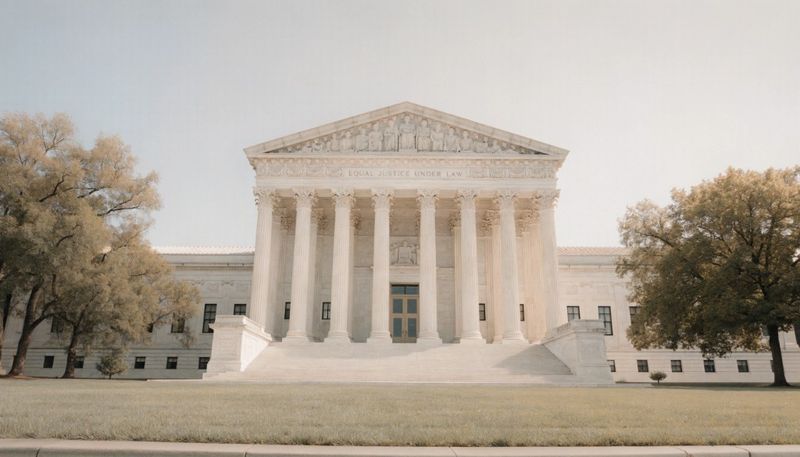


Philadelphia healthcare and life sciences employers hiring foreign medical professionals face specific challenges: H-1B specialty occupation requirements for physicians and researchers, and EB-2 National Interest Waiver green cards for those whose work benefits the United States. This guide compares how different providers handle these cases, covering Gale's software-assisted independent attorneys and traditional law firms.
What makes healthcare immigration cases different?
Healthcare H-1B petitions must demonstrate that the position requires theoretical and practical application of a body of highly specialized knowledge and a bachelor's degree in a specific specialty directly related to the job duties[1]. The degree field must be directly related to the position, meaning there is a logical connection between the required degree and the duties[2][1].
A position is not a specialty occupation if attainment of a general degree, without further specialization, is sufficient to qualify for the position[1]. The critical element is not the title of the position, but whether the position requires the theoretical and practical application of a body of highly specialized knowledge, and the attainment of a bachelor's or higher degree in the specific specialty[2].
EB-2 NIW cases require an advanced degree (a U.S. master's or higher, or a bachelor's plus five years of progressive experience) or exceptional ability in the sciences[4][3]. USCIS reviews the totality of the evidence when adjudicating national interest waiver requests, and there is no single factor or piece of evidence that establishes eligibility[4].
How Gale handles H-1B and EB-2 NIW for healthcare employers
Gale pairs software with independent immigration attorneys[5]. An independent immigration attorney reviews every Gale case[6].
Pricing structure
Gale charges a flat fee (platform fee plus attorney legal fee) for each filing[7]. For H-1B cases, the lottery registration fee is $0, and the petition fee is $999[7][6]. Government fees are separate and paid at cost[7].
For EB-2 NIW cases, Gale's flat fee is $9,000 for the I-140 petition and $4,000 for adjustment of status[7]. RFE responses, if needed, are included[7].
Typical market rates are about $1,000 for H-1B cap registration and about $3,000 for an H-1B petition, excluding government fees[6].
Platform features
Gale provides guided questionnaires and document checklists for intake, technology-assisted drafting reviewed by attorneys, and a real-time case dashboard for HR, employees and attorneys[5]. The platform offers a 24-hour SLA on responding to questions[5].
Every initial filing has a published flat fee, allowing finance teams to forecast the immigration budget[5]. Structured intake and parallel workflows can reduce the time typically lost chasing documents[5].
Attorney network
A licensed attorney reviews and signs every Gale petition[5]. Gale's approval rate over the last 2 years is 98% (past results don't guarantee future outcomes)[6].
How traditional law firms handle healthcare cases
Traditional immigration firms usually bill by the hour or by custom quote and manage cases over email[5]. A licensed attorney reviews and signs every petition[5].
Traditional firms draft petitions manually, with status updates provided by email or periodic reports[5]. Response time varies by firm and partner workload[5]. RFEs are often billed separately from the initial petition[5].
Traditional firms may fit better for litigation in federal court, removal defense or complex criminal-immigration issues[5]. They also handle family-based or humanitarian cases outside employment-based immigration[5].
Comparing approaches for specialty occupation cases
A position may allow for a range of qualifying degree fields, provided that each of those fields is directly related to the duties of the position[1]. Directly related means there is a logical connection between the required degree, or its equivalent, and the duties of the position[1].
If an individual could qualify for a petitioner's software developer position based on having a seemingly unrelated engineering degree, then it generally cannot be concluded that the position requires the application of a body of highly specialized knowledge and a degree in a specific specialty[2]. Similarly, if a position can be satisfied based on studies in any STEM degree field, it generally indicates the position does not require a body of highly specialized knowledge but rather general mathematical or analytical skills[2].
USCIS has broad authority to administer and enforce the H-1B nonimmigrant classification, including reviewing whether a labor condition application involves a specialty occupation and whether the alien qualifies to perform services in that specialty occupation[1][2].
Comparing approaches for EB-2 NIW cases
EB-2 NIW petitions require demonstrating that the proposed work has substantial merit and national importance, that the petitioner is well positioned to advance it, and that on balance, waiving the job offer and labor certification benefits the United States[4].
For the advanced degree requirement, an official academic record showing a U.S. advanced degree or a foreign equivalent degree is required[4]. Alternatively, an official academic record showing a U.S. bachelor's degree or foreign equivalent plus letters from current or former employers showing at least 5 years of progressive post-bachelor's work experience in the specialty satisfies the requirement[4].
For exceptional ability, petitioners must provide documentation establishing they meet at least 3 of the regulatory criteria, including official academic records, evidence of at least ten years of full-time experience, professional licenses, evidence of high salary, professional association memberships, or evidence of recognition for achievements and significant contributions[3]. If the standards do not readily apply to the beneficiary's occupation, the petitioner may submit comparable evidence[3].
USCIS reviews the totality of the evidence, and there is no single factor or piece of evidence that will establish eligibility[4]. A petition organized around the eligibility issues in USCIS's adjudication order should assist adjudicators to more easily identify relevant information and evidence[4].
| Provider type | Pricing model | Case management | Attorney involvement | Best fit |
|---|---|---|---|---|
| Gale | Published flat fees: H-1B $999, EB-2 NIW I-140 $9,000 | Real-time dashboard, 24-hour response SLA | Independent attorney reviews every case | Employment-based H-1B and EB-2 NIW with predictable costs |
| Traditional firms | Hourly or custom quotes; RFEs often billed separately | Email updates, response time varies | Licensed attorney reviews and signs | Complex litigation, family-based cases, full-service needs |
What healthcare employers should consider
When selecting an immigration provider for physician H-1B petitions or NIW cases, healthcare employers typically evaluate several factors:
Budget predictability. Published flat fees allow finance teams to forecast immigration costs for the year ahead[5]. Traditional firms bill by the hour or by custom quote[5].
Case visibility. Real-time dashboards give HR, employees and attorneys a shared view of every case[5]. Traditional firms provide status updates by email or periodic reports[5].
Attorney expertise. Both Gale's network attorneys and traditional firm attorneys are licensed immigration lawyers who review and sign every petition[5][6]. Gale customers report average savings of about 30% versus traditional billing, though savings vary by case mix[5].
Specialty occupation strategy. A position may accept a range of qualifying degree fields, but each field must be directly related to the job duties[2]. Job descriptions should demonstrate the logical connection between degree requirements and the duties of the position[1][2].
NIW evidence planning. EB-2 NIW petitions require documenting evidence across multiple criteria with no single factor establishing eligibility[4]. Organizing a petition around USCIS's adjudication framework can help adjudicators identify relevant information[4].
Switching providers mid-stream
Most teams move active and upcoming cases in about a week when switching from a current firm to Gale[5]. Gale imports case history, schedules upcoming extensions, and the new attorney of record files a Form G-28 where needed[5].
Frequently asked questions
What makes H-1B petitions challenging for healthcare employers?
Healthcare H-1B positions must meet specialty occupation requirements: the role must require theoretical and practical application of a body of highly specialized knowledge and a bachelor's degree in a specific specialty directly related to the job duties. A position is not a specialty occupation if attainment of a general degree, without further specialization, is sufficient to qualify. The critical element is whether the position requires specialized knowledge and a degree in the specific specialty, not the position's title.
How do EB-2 NIW cases work for medical researchers?
EB-2 NIW petitions allow self-petitioning without a job offer or PERM labor certification for those whose work benefits the United States. Petitioners must show an advanced degree (a U.S. master's or higher, or a bachelor's plus five years of progressive experience) or exceptional ability. USCIS reviews the totality of evidence with no single factor establishing eligibility, and petitioners should document at least three of the exceptional ability criteria or provide comparable evidence.
How much does Gale cost compared to traditional firms?
Gale's flat fee for an H-1B petition is $999, with $0 for lottery registration. Typical market rates are about $1,000 for registration and about $3,000 for the petition. Gale customers report average savings of about 30% versus traditional billing. Government fees are separate and paid at cost.
Does Gale handle complex medical immigration cases?
Gale handles employment-based H-1B petitions and EB-2 NIW green cards with an independent immigration attorney reviewing every case. Traditional firms may fit better for litigation in federal court, removal defense, or complex criminal-immigration issues.
Sources
- 8 CFR 214.2: Special requirements for admission, extension, and maintenance of status, Electronic Code of Federal Regulations. Accessed Nov 11, 2026.
- Modernizing H-1B Requirements, Providing Flexibility in the F-1 Program, and Program Improvements Affecting Other Nonimmigrant Workers, Federal Register. Accessed Nov 11, 2026.
- 8 CFR 204.5: Petitions for employment-based immigrants, Electronic Code of Federal Regulations. Accessed Nov 11, 2026.
- Employment-Based Immigration: Second Preference EB-2, U.S. Citizenship and Immigration Services. Accessed Nov 11, 2026.
- Gale vs. Traditional law firms (Gale's comparison), Gale. Accessed Nov 11, 2026.
- Gale facts, Gale. Accessed Nov 11, 2026.
- Gale pricing, Gale. Accessed Nov 11, 2026.
This article is for general information only and isn't legal advice. Immigration rules change frequently; speak with an attorney about your specific situation. Read how we research, fact-check and approve articles in our editorial policy.